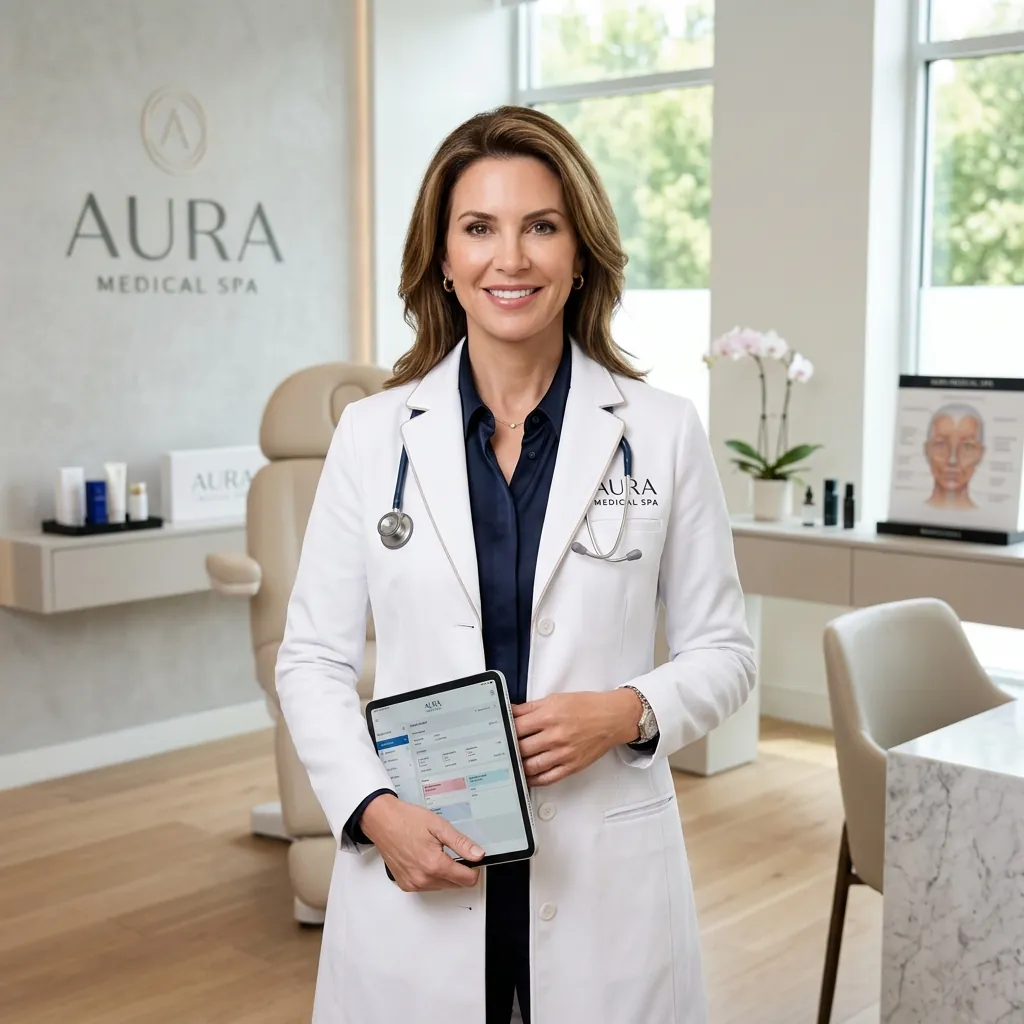
Quick Answer: Posting product flat-lays trains your clients to treat your clinic like a retail store, forcing you to compete on price. Stop selling skincare bottles. You must sell your clinical judgment by educating your audience on protocols, ingredient science, and personalized treatment plans to build unshakable trust.
You post a gorgeous backlit photo of a new medical-grade serum on your grid. You list all the active ingredients. Niacinamide. Zinc. Hyaluronic acid. You detail exactly what they do. You hit publish.
Two hours later, the only comment you have is from the serum brand itself.
Nobody is booking an appointment because they saw a bottle of serum.
You treat your Instagram like a drugstore shelf. Your clients do not buy skincare bottles. They buy your clinical judgment. They can buy that exact same bottle of serum from five other clinics or order it online. The only thing they cannot buy anywhere else is your brain. If your feed is just a collection of product flat-lays and photos of your clinic room, you immediately tell the market you are just a retail store.
To stop competing on price with the discount clinic down the street, you must compete on trust.
Why Your Menu Feed Fails
Most med spas and estheticians make their Instagram look like a sterile print menu.
- They post photos of their lasers. Nobody cares about the machine. They care about whether it will burn their skin.
- They post generic product catalogs. It looks spammy.
- They list service prices. This invites people to price-shop. They see you do lip fillers for $500, but Dr. X does it for $450.
You are a clinical expert. Act like one.
The Authority Content Framework
To build a premium clientele, your content needs to prove you know things other practitioners miss. Integrate these three content types immediately.
1. The Skincare Intervention
Stop telling people how great a product is. Tell them what they are doing wrong.
“If you are struggling with redness, please stop using that viral TikTok exfoliant three times a week.”
Explain the damage it does to their skin barrier. When you call out common mistakes, you position yourself as the person who fixes the mess made by cheap Internet advice.
2. Translate, Do Not List
Do not copy and paste ingredient lists. Translate them into real-world clinical results.
Instead of saying “This contains 5% Niacinamide,” explain the outcome. “This is the ingredient that keeps your skin from getting that greasy afternoon shine, without drying you out.” Keep it simple, clear, and focused on the actual texture and feel of their skin.
3. Have Rigid Standards
Nothing builds trust faster than having standards. Share the controversial treatments you refuse to perform at your clinic and explain the medical reasoning behind it. For example, explain why you refuse to do deep chemical peels on a client who has never used medical-grade home care first.
This shows you prioritize their skin health over taking their money.
Install a Workflow
You went to school to master aesthetics and skin biology, not to write daily Instagram scripts or design carousels. Between back-to-back chemical peels and client consultations, your marketing usually gets pushed to 10 PM.
I built the Beauty OS to solve this exact problem. It is a plug-and-play Notion workspace loaded with authority-building frameworks, over 120 viral hooks tailored for clinics, and a 30-day pre-filled calendar. It removes the guesswork from your marketing so you can focus on your clients. Check it out to position yourself as the premier clinical authority in your city.