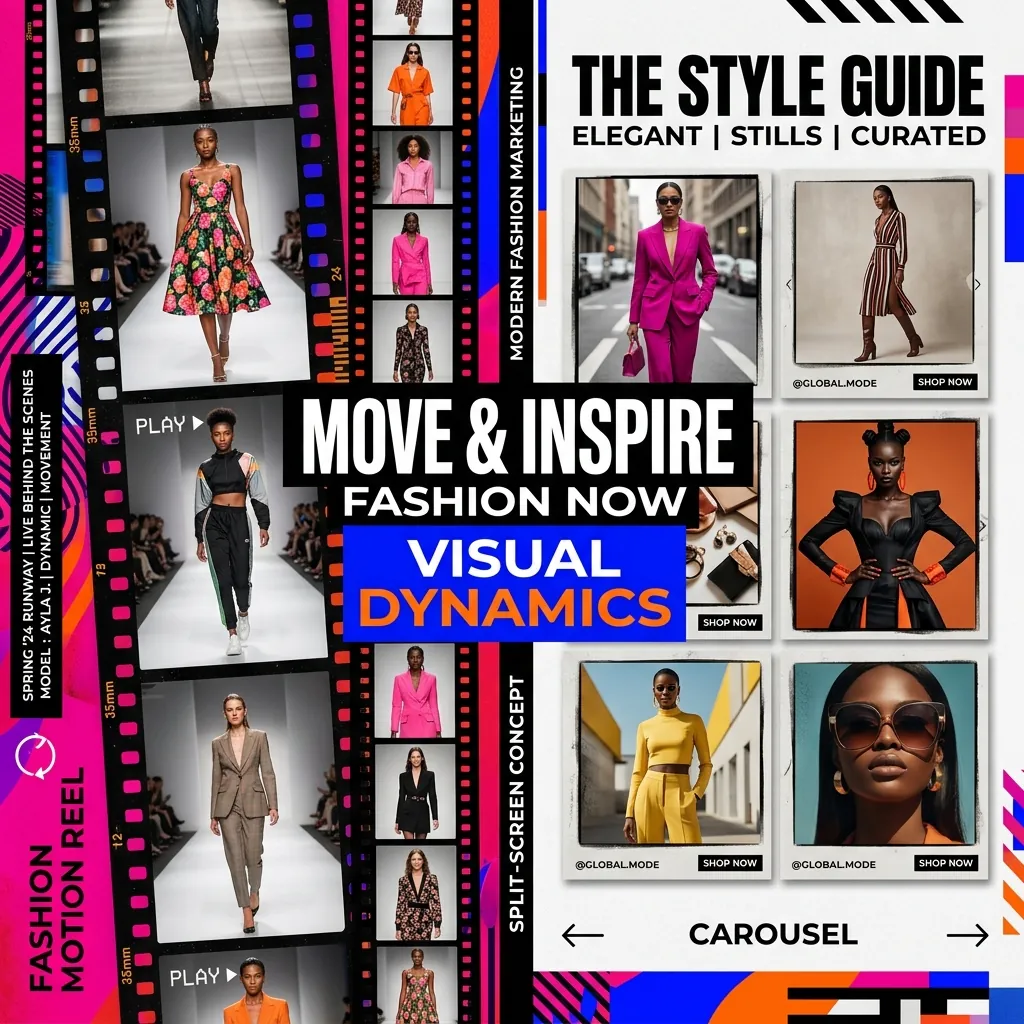
Quick Answer: Reels act as top-of-funnel discovery engines built to grab attention, while Carousels function as middle-of-funnel conversion tools designed to educate and build trust. Stop relying entirely on fast-paced transition videos. You must build a balanced format mix to turn viewers into paying customers.
You post a quick 5-second Reel of your new linen dress using a trending audio. You wake up the next morning to 15,000 views. You immediately log into Shopify expecting a wave of orders. Your dashboard shows exactly zero sales. Your active carts screen is completely empty.
Views do not pay rent.
If you only post fast-paced transition Reels to trending music, you build an audience of entertainment seekers. They are not clothing buyers. They like the fast cuts and the music. They have absolutely no idea what the fabric feels like, how it fits, or why they should drop $80 on it.
You need a format strategy that actually drives revenue.
The One-Format Feed Trap
Most boutique owners fall into one of two extremes:
- The Reel Addict: You only post high-energy, 7-second videos. The feed looks busy, but there is zero depth. The audience gets format fatigue.
- The Lookbook Spammer: You post 10-slide carousels of the exact same outfit from virtually identical angles. It is incredibly boring. Nobody needs to swipe through ten photos of you standing in the exact same spot just to see the back of a white dress.
Here is the exact breakdown of how to use these two formats to convert followers into customers.
Reels are Your Storefront Window
Think of Reels as the sidewalk sign outside your physical shop. Their only job is to stop someone walking by who has never heard of you and get them to step inside.
Because the algorithm pushes Reels to non-followers, they are perfect for broad discovery.
Keep your Reels under 15 seconds. Focus on the vibe, the aesthetic, the lighting, and quick transitions. You do not need to explain the fabric composition in a Reel. You just want them to ask what the brand is and click your profile.
Carousels are Your Fitting Room
Once a customer clicks your profile, they are in your store. This is where you hand them the clothes and close the door of the fitting room. This is where Carousels convert.
A Carousel is a high-intent format. If someone swipes through 8 slides, they are actively spending time with your brand. They are highly primed to buy.
Use Carousels to show real utility and detail:
- Real Utility: Style one item three different ways. Show them how to wear the same top for a casual coffee run, a day at the office, and a Friday night dinner.
- Fabric and Fit Details: Use macro shots of the stitching, the linen blend, or how the elastic waistband stretches. Show the garment on different body types.
- The Sizing Breakdown: Specify the size you are wearing and your exact measurements.
When a customer visualizes themselves wearing the item in three different scenarios and understands the fit, the hesitation disappears. They buy.
Install a Content Workflow
Balancing these formats manually is a headache. You are busy unpacking new inventory and managing customer returns.
Boutique owners waste time chasing empty views. I built The Fashion OS to fix this. It is a Notion workspace with a pre-filled 30-day calendar that strategically mixes Reels for reach and Carousels for revenue. It includes over 50 pre-written scripts and styling copy frameworks. Stop guessing and start driving real Shopify sales.