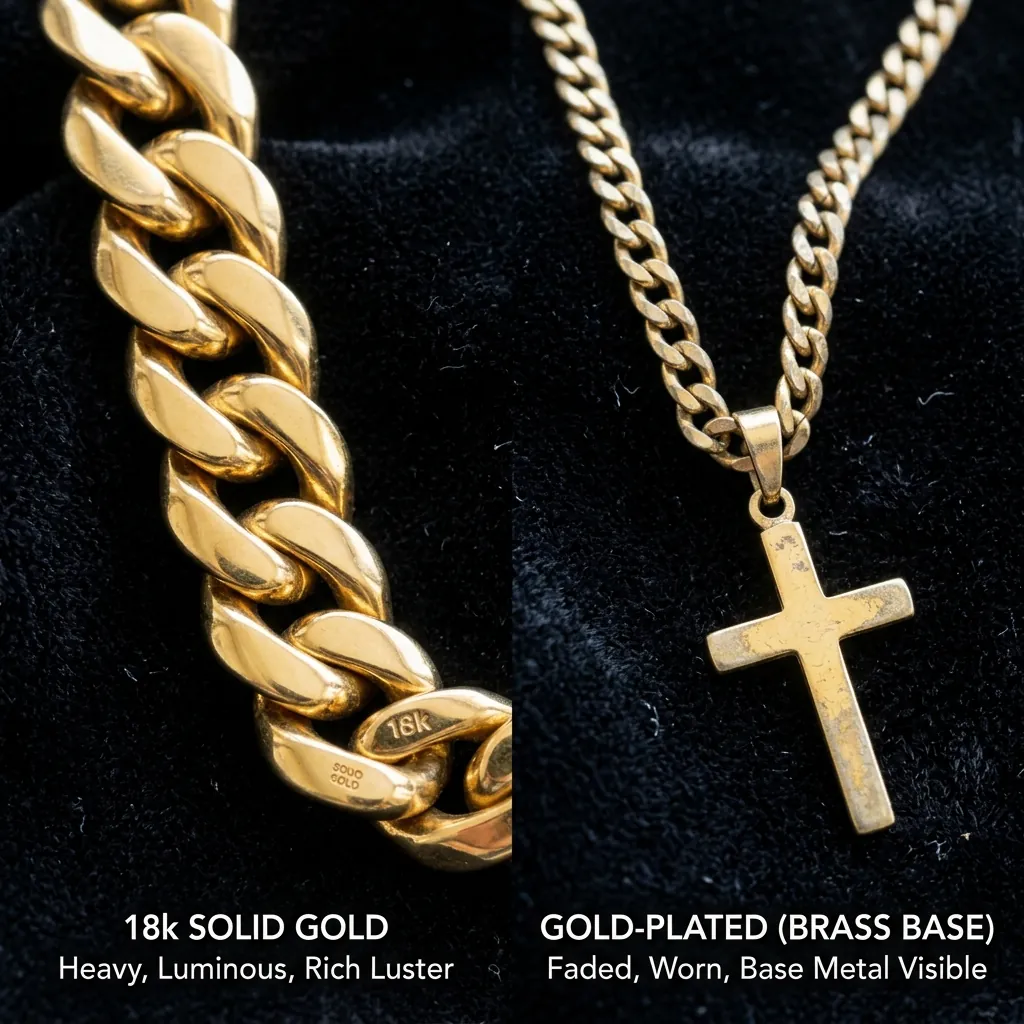
Quick Answer: If you do not educate your audience, they will always default to the cheapest option. Stop resenting customers who price-shop you against fast fashion. You must proactively explain the microscopic differences between solid gold and plated brass to justify your pricing and sell out your collections.
You launch a stunning collection of solid 14k gold rings. They are delicate, built to last a lifetime, and priced at $350. You post them. Five minutes later, a customer sends a message.
“I saw a ring that looks exactly like this on a fast-fashion site for $18. Why is yours so expensive?”
Your blood boils. You want to type out a 500-word essay about the price of gold per ounce, the hours you spent polishing, and how the cheap site is a scam.
Take a breath. It is not the customer’s fault. It is yours.
To a scrolling buyer, a shiny yellow ring is just a shiny yellow ring. They cannot touch the weight, feel the density, or see the microscopic layers of metal. If you expect them to magically understand why solid gold costs 20 times more than gold-plated brass, you will keep losing sales to cheap drop-shippers.
You cannot sell a premium product without providing a premium education.
The Scam of Gold Plated Jargon
The fast-fashion industry uses fancy words to hide garbage quality. They use terms like “gold vermeil,” “18k gold plated,” and “filled” to make cheap pot metal sound like royal treasure.
Here is the truth you must show your audience:
- Electroplating Is Microscopic: Most plated jewellery has a gold layer that is 0.5 microns thick. That is literally thinner than a strand of spider silk. It is designed to look pretty in a box, wear off in a week, turn the customer’s finger green, and end up in a landfill.
- Renting Cheap Metal: A customer buying a $20 plated ring four times a year because it keeps tarnishing is literally renting cheap brass. They are not saving money.
- Solid Gold Is Permanent: It does not oxidize. You can wear it in the shower, the ocean, and the gym. It will look exactly the same in 100 years. It is an investment, not a disposable accessory.
How to Educate Without Sounding Defensive
If you wait until someone complains in your comments to explain your materials, you look defensive. Make education a core part of your feed.
The Green Finger Test
Do not just show pretty styled photos. Post a side-by-side comparison carousel. Show a cheap plated ring that has turned dark, chipped, and green after three months of wear, right next to one of your solid gold bands worn daily for three years. The contrast is undeniable. It stops being a debate about price and becomes a debate about common sense.
Break Down the Jargon
Start a simple “Industry Myths” series. Explain exactly what Vermeil means. It is just gold over silver, which still tarnishes. Use simple drawings or macro video clips to show the physical difference between a solid piece of gold and a microscopic layer of plating.
The Cost-Per-Wear Math
A $350 solid gold ring worn every single day for five years costs about 19 cents a day. A cheap plated ring that breaks after two months costs significantly more in the long run. Show your audience the exact math. When you empower your buyers with actual knowledge, they stop price-shopping and start investing in your craft.
Build the Education System
You became a jeweller to melt metal, set stones, and bring your designs to life. You did not do it to spend hours arguing about metallurgy in Instagram comments.
Brilliant metalsmiths get undercut by fast-fashion giants because they lack a communication system. I built The Jewellery OS specifically for independent jewellery brands. It includes over 15 pre-written material education frameworks, viral hooks, and a 30-day calendar designed to justify your prices without requiring you to write essays from scratch.